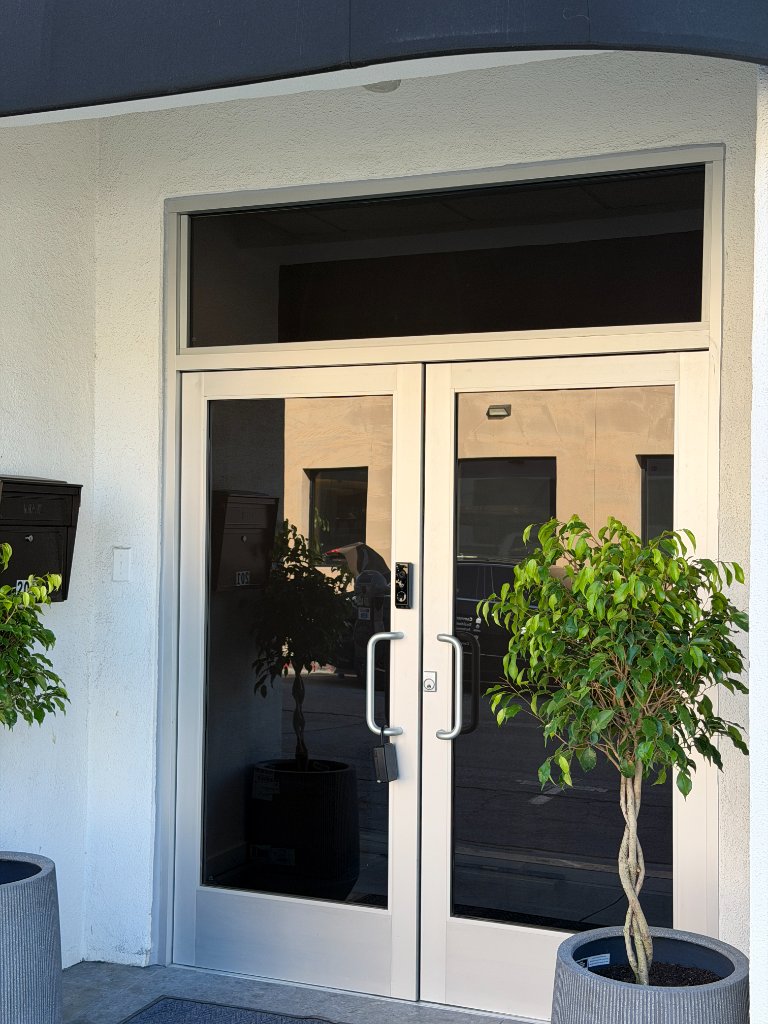
When Standard Won't Cut It: An Honest Guide to Complex Commercial Window Film in Orange County
Most commercial window tinting literature treats glazing as a series of simple, flat rectangles. In reality, the architecture of modern Orange County office parks and storefronts—from the coastal corridors of Huntington Beach to the business centers in Irvine—is rarely that straightforward. When you look at high-angle clerestory windows, deep transoms, or fixed office partitions, you are looking at a set of variables that require a shift from standard installation techniques to a craft-focused, surgical approach. Working on complex glass demands more than just a squeegee and a slip solution. It requires an understanding of how glass geometry influences film tension, how factory gaskets behave under thermal stress, and how to manage tight clearances where the film must meet the frame perfectly without lifting. This guide explores the mechanical realities of these challenging installs, providing a transparent look at what separates a quick, basic application from a project requiring precision, secondary scouting, and specialized staging. ## The Mechanics of Complex Glass: Heat Shrinking and Relief Cuts When glass features a curve or an extreme angle, the film cannot simply be laid flat. If an installer tries to force a flat piece of film onto a compound surface, it will inevitably wrinkle or stretch in ways that lead to premature failure. This is where the art of heat shrinking comes in. By using controlled heat, a technician can shrink the film's microscopic structure to conform to the glass's shape. However, heat shrinking alone is not always enough, especially with non-standard frames. This is where relief cuts become essential. A relief cut is a precise, micro-cut made into the excess film that allows it to lay flat against an obstruction or around a corner without bunching. When performed correctly, these cuts are completely invisible once the edge is trimmed, ensuring the film remains flush with the glass surface. The goal is to avoid tension at the edges, which is the primary cause of film peeling. ## Navigating Mullions, Fixed Fixtures, and Obstructions Many Orange County commercial buildings, particularly in busy retail centers near Pacific Coast Highway, feature multi-pane storefronts divided by metal mullions. Tinting these requires a deep understanding of the window seal. If a technician scores the film too close to a deteriorating rubber gasket, the film may fail. If they cut too far away, light leaks and an unsightly border appear. For fixed obstacles—such as medical reception dividers or bolted office partitions—the challenge is access. When you have a gap of only 2 to 4 inches between a desk or counter and the glass, you cannot maneuver a standard installation tool. In these cases, we utilize custom-modified squeegees and a specific sequencing strategy. We work from the top of the pane downward, ensuring that dirty runoff solution does not drip onto the freshly cleaned lower sections of the glass. This staging process is critical for maintaining the environment required for high-end nano-ceramic film. ## Understanding Installation Standards When evaluating a commercial quote, it is helpful to have a baseline for what professional standards look like. Whether you are dealing with a standard storefront or a complex clerestory window, the physical requirements for a lasting install remain consistent: - Edge Margin: A clean perimeter edge of 1/16 inch to 1/8 inch (1.6 mm to 3.2 mm) from the sealing gasket is standard to prevent water pooling and edge lift. - Surface Prep: Standard cleaning takes roughly 30 minutes per 125 square feet. On obstructed or heavily mullioned glass, this interval often doubles to account for intricate edge scraping. - Curing Time: Most architectural films require up to 30 days of cure time to reach full adhesive bond, especially in humid or coastal environments where moisture evaporation can be slower. - Cost Factors: While flat-pane commercial work often falls between $5 and $12 per square foot, custom labor for architectural obstacles, non-standard shapes, or projects requiring lift equipment are quoted based on the specific physical demands of the site. ## Why Not All Films Are Equal We focus on premium nano-ceramic film because of how it handles real-world conditions. Many competitors offer dyed, carbon, or metallic films. While these are entry-level solutions, they come with trade-offs. Metallic films, for example, can interfere with cellular signals in office buildings. Dyed or carbon films may fade or lose their heat-rejection properties over time. Our nano-ceramic film is dye-free and metal-free, offering superior infrared heat rejection—up to 99%—and consistent TSER performance. This ensures that your office or retail space remains cool without the haze often found in lower-quality ceramic products. You can learn more about the technical differences by reviewing our commercial window film page or exploring our general automotive window tint offerings if you have a fleet that needs the same level of care. ## The Reality of Multi-Visit Installs Honesty is a core part of our service. There are jobs—particularly high-altitude lobby windows or heavily partitioned office suites—that simply cannot be completed in one go. If a project requires specialized scaffolding, or if we need to template complex, non-removable glass panels to ensure a perfect factory fit, we will schedule a scouting day separate from the installation day. Attempting to rush an install on complex glass is how mistakes happen. If an office has a unique, non-standard layout, we prefer to take the time to measure and prepare the film off-site. This minimizes downtime in your workspace and ensures that the final application is seamless. ## Limitations and Risks Even with expert application, there are limits to what window film can do. If the original glass frames have significant salt-spray corrosion—common in beach cities—the film's adhesive may not bond to the rubber gaskets as effectively as it would on newer, sealed frames. Furthermore, if the glass itself has existing stress cracks or deep manufacturing defects, applying film can sometimes highlight these issues due to the change in thermal load. We always perform a thorough site inspection before beginning any work to ensure your glass is a suitable candidate for professional film. ## Professional Execution in Orange County Whether you are managing a medical facility in Fountain Valley or a retail shop in Huntington Beach, the difference between a long-lasting installation and one that peels within a year is the technician's approach to the tricky parts. We bring the same level of precision to a complex commercial clerestory that we bring to a residential window film project. Our mobile service allows us to bring our tools, staging, and expertise directly to your facility. If you have a complex project and want an honest assessment of what it will take to get it done right, reach out to us. We are happy to walk you through the process, from planning the staging to the final trim. Want a free quote? Tap here: https://shinelesswindowtinting.com/#contact-form or call/text (714) 360-9969. Automotive owners can book their service directly at https://shineless.bookings.getclickrez.com/book/vehicle.
Common Questions
How long does it take for window film to fully cure after installation?
Most architectural films require up to 30 days of cure time to reach a full adhesive bond. This period can be longer in humid or coastal environments where moisture evaporation happens more slowly.
Why do you use nano-ceramic film instead of metallic or dyed films?
Nano-ceramic film is preferred because it is both dye-free and metal-free, preventing cellular signal interference common with metallic films. It also provides up to 99% infrared heat rejection and avoids the fading issues found in lower-quality dyed products.
What is the purpose of relief cuts in window tinting?
Relief cuts are precise, micro-cuts made into excess film when working around obstructions or corners. These allow the film to lay flat without bunching or creating tension at the edges, which is the primary cause of premature film peeling.
Can window film be installed if my office has salt-spray corrosion on the frames?
Significant salt-spray corrosion on original glass frames can prevent the film's adhesive from bonding effectively to the rubber gaskets. We always perform a site inspection to ensure your specific glass and frame condition are suitable candidates for professional film application.
Ready to Protect Your Home?
Free in-home consultations across Huntington Beach, Newport Beach, Seal Beach & Laguna Beach.
(714) 360-9969 — Free EstimateStop UV Damage Before It Starts
Shineless installs premium ceramic window film at your home — no shop visit needed. Serving Huntington Beach, Newport Beach, Seal Beach, Laguna Beach, and all of Orange County.