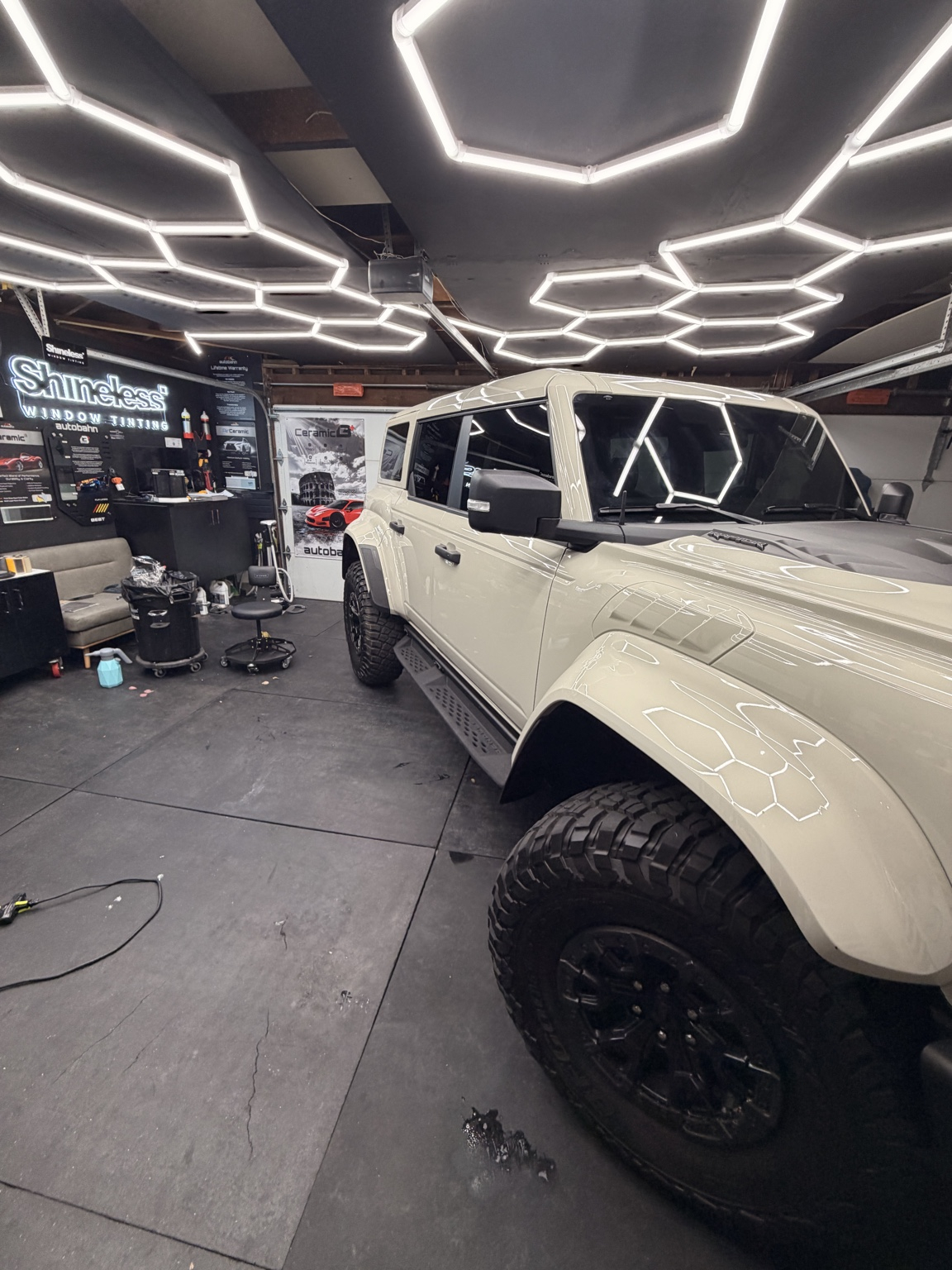
How Window Tint Is Actually Installed: Why Wet Application Is Necessary for Your Vehicle
Many vehicle owners assume that high-performance window film adheres to glass like a standard sticker. If you have attempted a DIY peel-and-stick tint kit, you have likely discovered that this approach leads to immediate failure. Professional automotive window film does not use a dry adhesive that bonds instantly. Instead, it utilizes a pressure-sensitive adhesive that requires a precise, wet-application process. Without this moisture-based barrier, the film would grab the glass prematurely, trapping dirt, dust, and air bubbles that are impossible to remove once the bond is set. In our mobile service across Huntington Beach and the greater Orange County area, we see the results of various installation methods. Whether we are working on a frameless door window or the complex rear glass of a sedan, the process remains consistent. We use a controlled liquid interface to slide the film into alignment. Understanding this process is the first step in knowing why professional automotive window tint lasts for years while amateur dry-installs peel away. You can watch a real Shineless install from start to finish to see these mechanics in action. The secret to a flawless tint job is the slip solution. This is a balanced mixture of purified water and a specific, mild surfactant. This solution serves three critical functions. First, it acts as a lubricant, creating a temporary hydroplane layer between the film adhesive and the vehicle glass. This allows the installer to float the film across the surface, positioning it with precision without the adhesive grabbing the glass. Second, the slip solution helps carry microscopic dust away from the adhesive surface. In a mobile environment, such as a driveway in Newport Beach or Costa Mesa, preventing airborne particles is essential. The solution holds these particles in suspension so they can be squeegeed out. Third, it allows the film to be trimmed to the shape of your window edges. Using plain tap water is discouraged, as minerals and impurities in local water sources can interfere with the chemistry of the adhesive or leave behind deposits that degrade the clarity of the film. One common question is why installers use a heat gun on the outside of the window when the film is applied to the inside. Automotive glass features compound curves, while a sheet of polyester film is inherently flat. To solve this, we place the film on the exterior of the glass during the prep phase. By applying controlled heat, we shrink the film fibers, allowing it to take the shape of the glass. Once the film is heat-formed, it lies flat when installed on the interior. After the film is placed on the interior, the installer uses a squeegee to push water and trapped air from the center toward the edges. It is physically impossible to remove 100% of the moisture during the initial installation. The remaining microscopic water molecules permeate through the porous structure of the polyester film and evaporate over time. This is why your new tint may look slightly hazy or feature small water pockets immediately after installation. This is a normal stage of the curing process. As the film dries, these pockets vanish and the adhesive reaches its permanent bond. You should avoid rolling down your windows for at least 3 to 5 days to ensure the edges remain in place. When comparing quotes, keep these industry standards in mind. Expect a 3 to 7-day cure period in direct warm sunlight. In humid, coastal climates like Huntington Beach, or during overcast seasons, this can extend to 14 to 30 days. Professional installation is best performed in environments between 65F and 80F to ensure the slip solution provides adequate working time. Roll-down windows must remain stationary for 3 to 5 days to prevent the rubber seals from catching the film edge. Dry, peel-and-stick films fail on automotive glass primarily because they lack the ability to be manipulated. Because these products are designed to stick immediately, any mistake made during placement is permanent. Furthermore, these films lack the structural integrity to handle the thermal expansion and contraction that car windows undergo in the California sun. Not all window films are the same. Dyed and carbon films are entry-level options that often lack significant heat rejection. Metallic films provide high heat rejection but can interfere with cellular and GPS signals. Nano-ceramic films, such as those from Hüper Optik and XPEL, are dye-free and metal-free. They provide high Total Solar Energy Rejected without signal interference and are designed for longevity. While we maintain a strict protocol for dust mitigation, mobile installation occurs in real-world environments rather than a sterile laboratory. If you notice a small, isolated speck of dust, understand that this is a risk inherent to mobile window tinting. However, true professional installation should result in a finish indistinguishable from factory tint. We stand by our work to ensure your vehicle meets both your aesthetic goals and California legal visibility standards. Ready to upgrade your vehicle with ceramic protection? Whether you are in Huntington Beach or anywhere in Orange County, we come to you. Want a free quote? Tap here: https://shinelesswindowtinting.com/#contact-form. To schedule your all services appointment, visit our booking link: https://shineless.bookings.getclickrez.com/book/vehicle or call us directly at (714) 360-9969.
Common Questions
Why does my window tint look hazy after installation?
It is normal for window tint to look slightly hazy or feature water pockets immediately after installation. This is because moisture molecules are trapped between the glass and film and must permeate through the film to evaporate during the curing process.
How long do I need to wait before rolling down my car windows after tinting?
You should avoid rolling down your windows for at least 3 to 5 days after the installation. This waiting period ensures that the edges of the film remain in place while the adhesive sets its permanent bond.
Can I use tap water for a DIY window tint install?
Using plain tap water is not recommended for window tint installation. Minerals and impurities in tap water can interfere with the adhesive chemistry and leave behind deposits that degrade the clarity of the film over time.
Why is a heat gun used on the outside of the window?
A heat gun is used to pre-form the film to the exterior glass, which often features compound curves. Shrinking the film fibers allows the flat polyester material to conform to the curvature of the window before it is applied to the interior.
Ready to Protect Your Home?
Free in-home consultations across Huntington Beach, Newport Beach, Seal Beach & Laguna Beach.
(714) 360-9969 — Free EstimateStop UV Damage Before It Starts
Shineless installs premium ceramic window film at your home — no shop visit needed. Serving Huntington Beach, Newport Beach, Seal Beach, Laguna Beach, and all of Orange County.