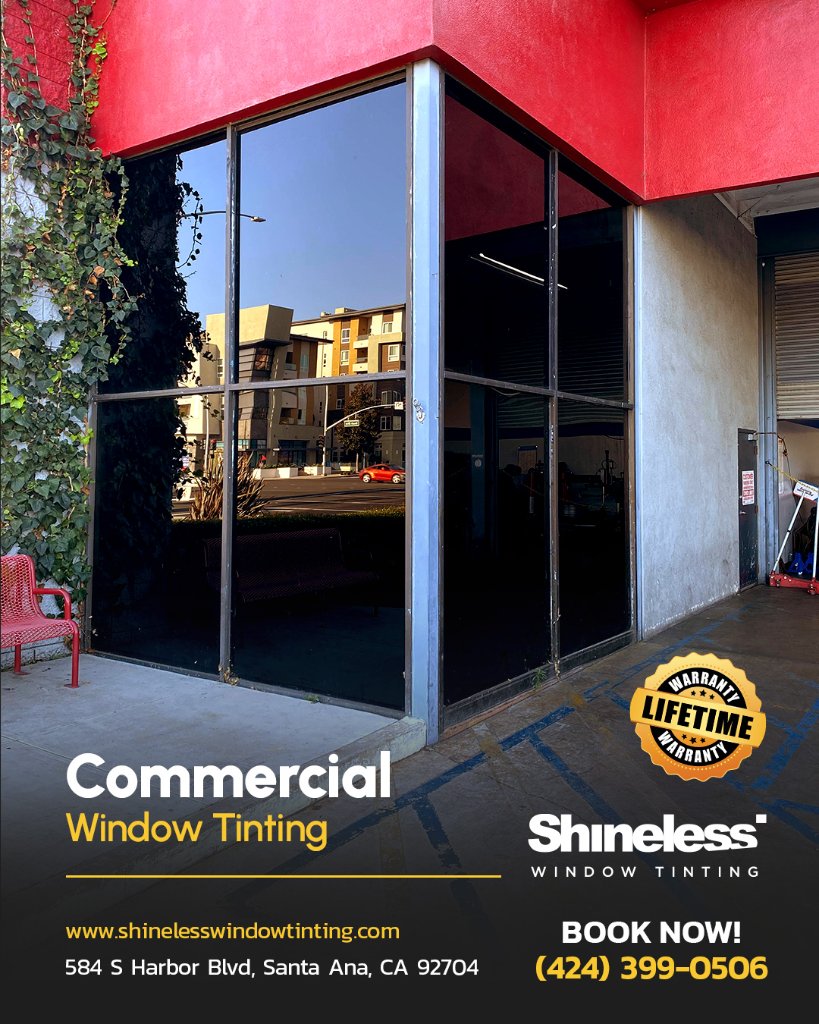
Optimizing Orange County Restaurant Environments with Solar Control Film
For many restaurant owners in Orange County, the sun creates a conflict between aesthetic appeal and operational comfort. While natural light provides an inviting atmosphere, operators in coastal hubs like Huntington Beach or Costa Mesa frequently struggle with intense solar heat gain and localized glare. When windows facing the Pacific Coast Highway or western exposures in high-traffic shopping centers experience high thermal gain, guest comfort diminishes, and staff efficiency often suffers. Addressing these issues requires a solution that preserves storefront clarity while improving the thermal performance of the dining room environment. Shineless Window Tinting specializes in professional-grade film applications designed for high-traffic hospitality environments. By installing advanced ceramic window films, restaurants can maintain the utility of window-adjacent tables throughout the day. This approach focuses on technical performance, specifically rejecting infrared heat and mitigating glare, without creating the reflective mirror appearance common in older metallic film technologies. ## Solving the Revenue Impact of Uncomfortable Window Seats In the restaurant industry, every square foot of floor space contributes to revenue potential. When perimeter tables become uncomfortable due to elevated temperatures near the glass, those seats effectively drop out of the rotation. This is a common occurrence in Orange County, where late-afternoon sun hits floor-to-ceiling glass during peak dining hours. Spectrally selective ceramic films allow owners to maximize seating availability by rejecting solar heat before it transfers into the building. By narrowing the temperature differential between the window line and the interior core, operators can ensure a consistent dining experience across the entire floor plan. ## Eliminating Glare on POS Systems and Customer Devices Modern hospitality relies heavily on integrated technology, from handheld ordering systems to mobile payment terminals. Standard commercial glass provides no mitigation for solar glare, which can impede both staff efficiency and customer interaction with devices. High-performance solar film reduces this glare by filtering specific wavelengths of incoming light. This allows screens to remain legible even during peak sun exposure. Unlike heavy blackout shades or opaque blinds that darken a room, these films maintain high visible light transmission, ensuring the dining area remains bright and welcoming. ## Protecting Your Investment in Interior Finishes From custom mahogany tables and upholstered booths to wine displays and merchandise cases, restaurant interiors represent a significant capital investment. Without protection, sustained UV exposure contributes to the accelerated degradation of fabrics and finishes. Our nano-ceramic films are engineered to reject up to 99 percent of UV radiation, effectively providing a protective barrier for furniture and fixtures. This is particularly relevant for storefronts in bright corridors like 17th Street in Costa Mesa, where consistent sun exposure can otherwise cause premature fading of interior materials. ## Energy Efficiency and HVAC Relief Managing cooling costs under Southern California Edison peak energy pricing is a primary concern for commercial operators. When windows remain untreated, the building HVAC system must run continuously to counteract the heat load generated by direct solar radiation. Industry benchmarks indicate that high-performance solar window film can contribute to reduced cooling loads by minimizing the solar heat gain coefficient of the glass. This efficiency helps lower monthly utility expenditures and may reduce the mechanical strain on HVAC equipment, potentially extending the operational life of the units. ## Technical Specifications and Performance Metrics When selecting a film for commercial applications, performance must be balanced with visual clarity. We prioritize dye-free and metal-free nano-ceramic films to ensure longevity and consistent appearance. Key technical specifications include: - Total Solar Energy Rejected (TSER): Up to 70 percent, representing the film's total capacity to block solar heat. - Infrared (IR) Heat Rejection: Up to 99 percent, targeting the specific wavelengths responsible for thermal discomfort. - Ultraviolet (UV) Rejection: Up to 99 percent, which aids in preventing the degradation of interior materials. - Zero Signal Interference: Because these films are non-metallic, they do not disrupt cellular signals, Wi-Fi connectivity, or POS system performance. ## Comparing Film Technologies Not all window films offer identical performance characteristics. Entry-level dyed or carbon films are often marketed for heat reduction but may lack the durability required for commercial environments, sometimes showing signs of fading over extended periods. Metallic films can be effective at heat rejection, but they often produce a high-reflectivity mirror effect that may be undesirable for storefront visibility and can potentially interfere with wireless signals. Our commercial window film utilizes nano-ceramic technology designed to provide high optical clarity and substantial heat rejection without the drawbacks of older alternatives. For areas requiring privacy, such as private meeting or dining rooms, we also provide smart film options that allow for adjustable opacity. ## Transparency About Limitations While our installations improve interior comfort and reduce thermal load, window film is not a substitute for addressing mechanical failures in HVAC equipment. If a cooling system is undersized for the square footage of the restaurant, film will provide mitigation but will not solve the underlying hardware deficit. Additionally, some glazing types have specific tolerances regarding thermal stress. We perform a thorough assessment of your storefront to ensure that the chosen product is compatible with your existing glass to prevent damage. We provide an honest assessment of expected outcomes prior to any installation. ## Seamless Installation for Busy Restaurants We recognize that operational uptime is vital. As a mobile service provider, we offer installation scheduling outside of standard business hours to prevent disruptions to your daily service. We provide service throughout Orange County, with most commercial projects completed within 3 hours or less. We prioritize a clean, professional application process that leaves the workspace ready for your next shift. ## Getting Started with Shineless Window Tinting If you are interested in stabilizing your indoor dining environment and minimizing the impact of afternoon sun, contact us for a consultation. We are certified dealers for Hüper Optik and XPEL, ensuring that all products are backed by a manufacturer warranty. To discuss your storefront requirements or to book an assessment, call or text us at (714) 360-9969 or visit our booking link at https://shineless.bookings.getclickrez.com/book/.
Common Questions
Will window film interfere with my restaurant's Wi-Fi or POS connectivity?
No. Our nano-ceramic films are non-metallic, which ensures they do not disrupt cellular signals, Wi-Fi connections, or POS systems.
How much can window film reduce my cooling costs?
Industry benchmarks suggest that solar window film can help lower cooling costs by as much as 30 percent by reducing the solar heat gain coefficient of the glass, which decreases the load on your HVAC system.
Does solar film make the restaurant look dark or reflective?
No. We utilize nano-ceramic films that offer high infrared heat rejection while maintaining high visible light transmission, which keeps your space bright without the mirror-like effect of metallic films.
Will the film prevent my furniture and floors from fading?
Yes. Our nano-ceramic films reject up to 99 percent of UV rays, acting as a protective barrier to slow the fading of upholstery, wood surfaces, and other interior finishes.
Ready to Protect Your Home?
Free in-home consultations across Huntington Beach, Newport Beach, Seal Beach & Laguna Beach.
(714) 360-9969 — Free EstimateStop UV Damage Before It Starts
Shineless installs premium ceramic window film at your home — no shop visit needed. Serving Huntington Beach, Newport Beach, Seal Beach, Laguna Beach, and all of Orange County.