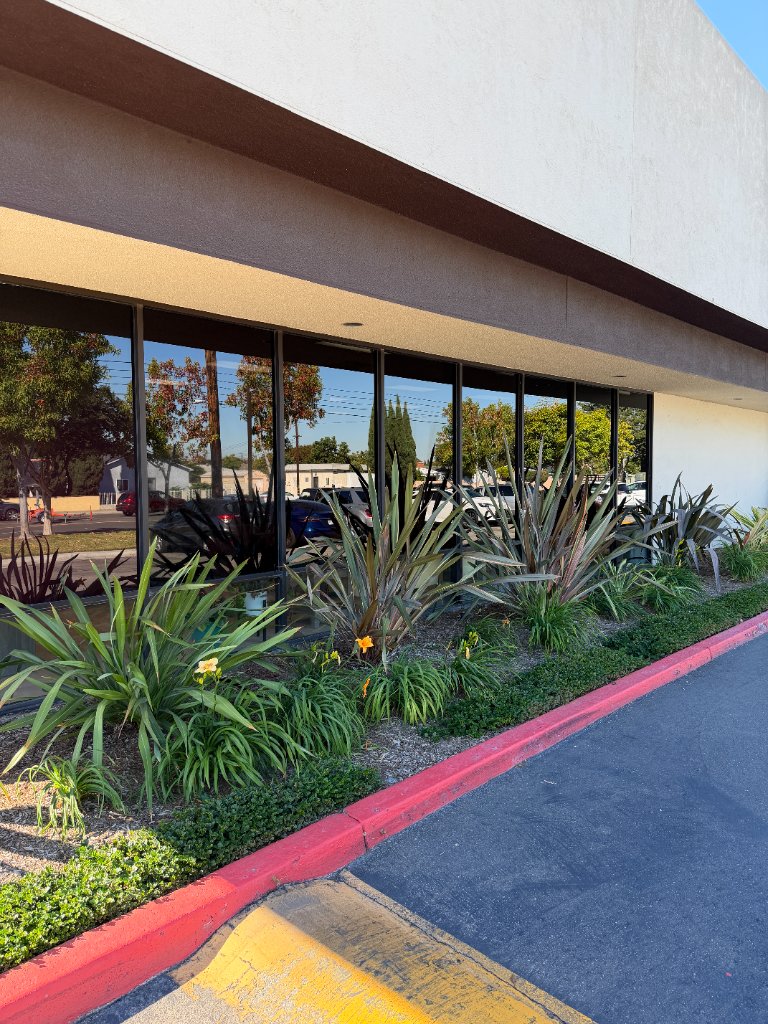
What’s the Deal with Glare? The Measurable Cost of Sunlight in Orange County Workspaces
In offices across Orange County, from the curtain-wall mid-rises in the Irvine Spectrum to street-level storefronts along Beach Boulevard, sunlight is often treated as a passive element. However, when that light turns into uncontrolled glare, it stops being a design feature and starts being a mechanical failure of the workspace. Glare is not merely a nuisance that requires a squint or a closed blind; it is a measurable optical imbalance that directly impacts human performance and building efficiency. At Shineless Window Tinting, we treat glare as an objective challenge. We analyze light levels using professional equipment to move beyond guesswork, ensuring that your commercial space maintains its intended aesthetic while regaining its functionality. Whether you are battling low-angle afternoon sun or the relentless diffuse reflection from coastal marine layers, understanding the physics of light is the first step to reclaiming your usable square footage. The Physiology of Glare: Why It Matters. Glare is the result of excessive contrast within an individual's field of vision. When the human eye transitions between a bright window and a screen or document, the pupil must constantly adjust. If the ratio between the bright light source and the task surface exceeds a range of 3:1 to 10:1, the eye experiences fatigue. This is why employees working near windows in Huntington Beach or Costa Mesa frequently report end-of-day headaches, blurred vision, and general exhaustion. This is not a matter of comfort; it is a physiological strain that lowers concentration and slows output. By reducing the intensity of light entering the space, we bring those ratios back into the human-optimized range, allowing for sustained focus without the need for constant blind adjustments. Direct Solar Glare vs. Diffuse Reflective Glare. Not all glare is created equal. Direct solar glare occurs when the sun sits low in the sky, typically during late afternoon, creating a direct line-of-sight hazard. This is the light that washes out monitors and creates hot spots on dining tables. Conversely, diffuse or reflective glare is the light bounced off surfaces like white concrete plazas, glass curtain walls, or the reflective surface of the Pacific Ocean. In coastal cities, this diffuse glare can be even more taxing than direct sunlight because it is omnipresent. High-quality spectrally selective film addresses both by filtering the wavelengths that cause glare while allowing visible light to pass through, keeping the interior bright without the blinding intensity. The Glass Orientation Audit: VLT Explained. We approach commercial tinting by conducting a site-specific orientation audit. Visible Light Transmission (VLT) is the percentage of light that passes through a window, and choosing the right VLT is critical to your building's orientation. A west-facing glass expanse requires a significantly different approach than a north-facing facade. For low-angle, intense afternoon sun, we often recommend a darker VLT (15–20 percent) to dampen the heat and brightness. For north or east-facing elevations, where consistent ambient light is needed for merchandising or natural office lighting, we utilize 35–50 percent VLT films. These films maintain the transparency required for retail display preservation while neutralizing the aggressive glare that makes storefront windows unusable for staff. Sector-Specific Solutions: Office, Restaurant, and Retail. Different businesses face different threats from the sun. In medical office plazas along MacArthur Boulevard, privacy and glare control are equally vital; patients need a calm, controlled environment, and staff must be able to view high-contrast medical imaging on monitors without distortion. For restaurants, glare is a direct revenue issue. Tables adjacent to windows are often avoided by customers during peak sun hours because they are too hot or bright. By installing professional-grade solar control film, those dead seats become the most desirable in the house, even during sunset. We bring our mobile service directly to your property to test your current light levels, ensuring that the film selection perfectly balances your business needs with the architecture of your building. Concrete Data for Commercial Owners. When evaluating window film as an investment, it is helpful to look at the industry standards and performance metrics that guide our installations. As a certified dealer of Hüper Optik and XPEL, we utilize films that meet the following performance benchmarks: - Energy consumption: Studies by the U.S. General Services Administration (GSA) indicate that solar control film can reduce commercial HVAC energy consumption by up to 29 percent on clear glass. - Cooling demand: Approximately 28 percent of commercial building cooling energy is consumed by solar heat gain through untreated glass. - Infrared rejection: Our premium nano-ceramic films block up to 97 percent of infrared heat and 99 percent of damaging UVA/UVB radiation. - Investment costs: Professional flat glass window tinting in the Orange County market generally ranges from 5 to 12 dollars per square foot, depending on the film's technological complexity and the specific requirements of your glass. The Technology: Ceramic vs. Alternatives. Not all window film is the same. Many legacy films rely on dyes, which fade and turn purple over time, or metallic layers, which can cause signal interference for Wi-Fi and cellular reception. We exclusively install premium dye-free, metal-free nano-ceramic films. This technology offers two distinct advantages: it provides exceptional heat rejection without relying on dark, hazy tints, and it ensures zero signal interference. While lower-cost carbon or dyed films might appear functional at installation, they lack the spectral selectivity that allows you to see out clearly while keeping the interior environment cool. Our ceramic films are designed for long-term use, maintaining clarity and color stability through the harsh Southern California sun. Limitations and Transparency. We believe in full transparency regarding what window film can and cannot do. Film is an excellent solution for glare and heat, but it is not a cure-all for every design flaw. For instance, if your office features massive, unshaded south-facing glass, tinting will significantly improve comfort, but it may not fully replace the need for supplemental cooling during the peak of a record-breaking summer heatwave. Furthermore, we must be cautious with older, double-paned insulated glass units; we always perform an on-site assessment to ensure the glass is healthy and capable of accepting film without a risk of seal failure or thermal stress breakage. We prioritize the safety of your glass assets above all else. Why Mobile Service Matters. Commercial projects in Orange County, from Huntington Beach to Irvine, require precision. By bringing our service directly to your location, we avoid the one-size-fits-all approach. We use photometers to measure your actual light levels, light meters to test existing heat transfer, and physical samples so you can see exactly how a film changes the aesthetic of your workspace under your specific lighting conditions. Most of our commercial installs are completed in three hours or less, minimizing disruption to your daily operations. For more information on how we integrate these solutions, explore our commercial window film page or review our all services to see how we help homeowners and business owners manage their environments. If you are ready to take control of the light in your office, restaurant, or clinic, we are ready to assist. Want a free quote? Tap here: https://shinelesswindowtinting.com/#contact-form. For mobile booking, call or text us at (714) 360-9969 or visit our booking portal at https://shineless.bookings.getclickrez.com/book/vehicle.
Common Questions
What is the recommended VLT for west-facing windows in Orange County?
For west-facing glass that experiences intense, low-angle afternoon sun, we typically recommend a darker VLT in the range of 15 to 20 percent. This level is effective at dampening both excess brightness and solar heat gain.
Does window tinting block cell phone signals?
Not all window film affects signals, but some metallic-based films can cause interference. We exclusively install premium metal-free, nano-ceramic films, which provide high heat rejection without interfering with Wi-Fi or cellular reception.
How much can window film reduce commercial energy costs?
According to studies by the U.S. General Services Administration, solar control film can reduce commercial HVAC energy consumption by up to 29 percent on clear glass. This is largely because about 28 percent of cooling energy is spent addressing solar heat gain.
Can I install window film on any type of glass?
We must be cautious with older, double-paned insulated glass units. We always perform an on-site assessment to ensure the glass is healthy and capable of accepting film to avoid the risk of seal failure or thermal stress breakage.
Ready to Protect Your Home?
Free in-home consultations across Huntington Beach, Newport Beach, Seal Beach & Laguna Beach.
(714) 360-9969 — Free EstimateStop UV Damage Before It Starts
Shineless installs premium ceramic window film at your home — no shop visit needed. Serving Huntington Beach, Newport Beach, Seal Beach, Laguna Beach, and all of Orange County.